
Returning a Rental Car After Hours? The Checklist That Could Save You Hundreds
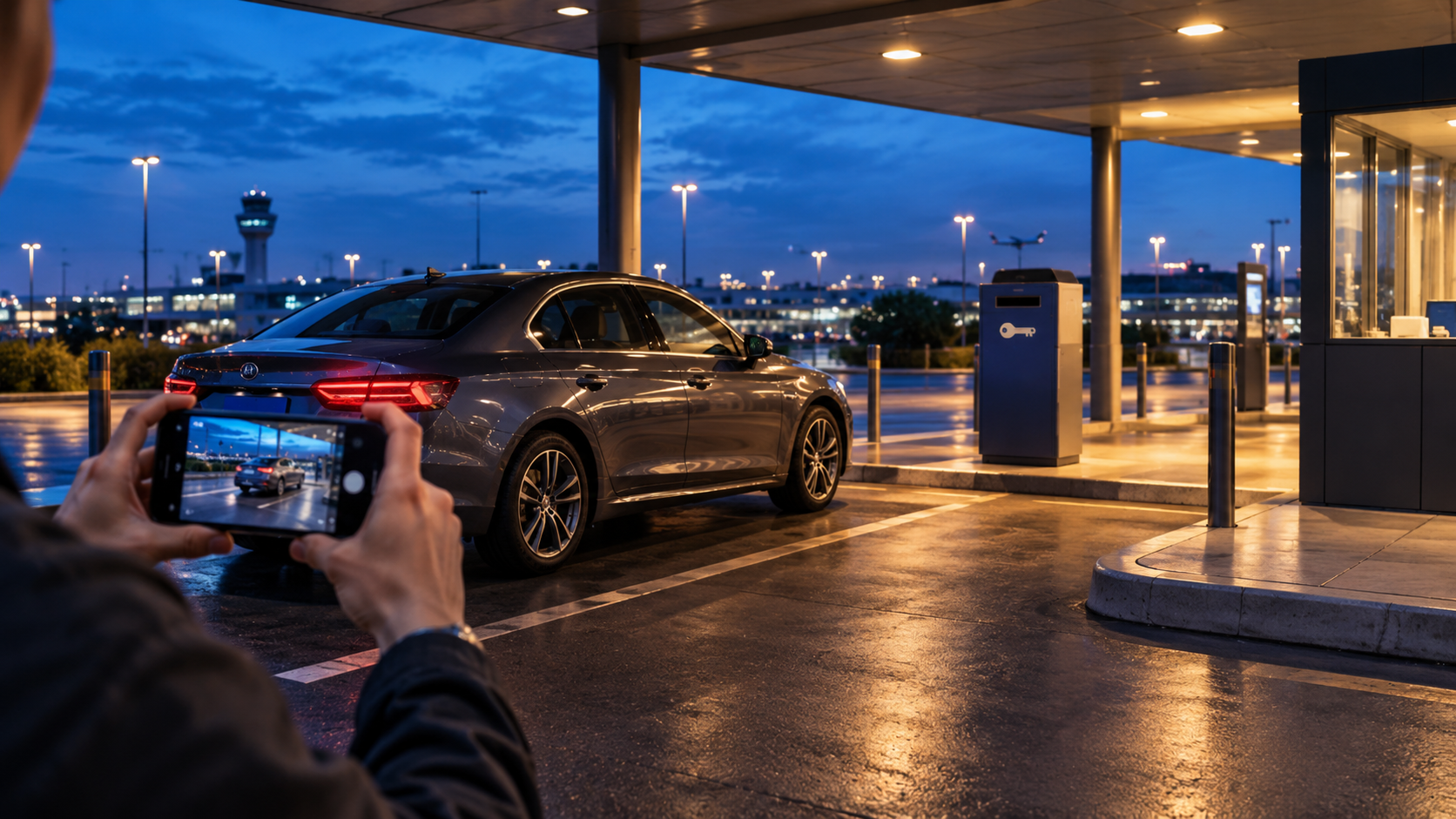
Everything you need to know about unattended rental car returns, key drop boxes, fuel receipts, and protecting yourself from unexpected charges.
It's 5:30 in the morning. Your flight leaves in two hours, the airport is still half asleep, and you're pulling into the rental car return area.
There's nobody at the counter.
An illuminated sign points toward a parking space and a key drop box. You park, grab your luggage, drop off the keys, and make your way to departures.
Simple enough.
Except there's something you might not realize: leaving your rental car in a parking space doesn't always mean the rental company has formally checked it back in.
Depending on your agreement, the vehicle might not be inspected until several hours later—or even the following morning.
What happens if someone notices a scratch after you've left? What if the fuel level is recorded incorrectly? Or what if the company says the vehicle was returned later than you actually dropped it off?
These aren't questions most people think about when they're rushing to catch a flight.
But they can become important when an unexpected charge arrives days after your trip.
Here's how after-hours rental car returns work, what can go wrong, and the simple precautions worth taking before leaving the keys behind.
Can You Return a Rental Car After Hours?
Yes, many rental companies allow after-hours returns, but the option isn't available at every location.
Major airport rental facilities often support early-morning or late-night drop-offs, even when employees aren't available to complete an inspection immediately.
Smaller neighborhood branches may have more restrictive arrangements.
Some have designated key drop boxes. Others require vehicles to be returned during business hours unless a special arrangement has been approved.
For example, Enterprise's official after-hours guidance explains that many airport locations support after-hours returns, while customers should confirm the procedure at other branches.
Before booking or returning your vehicle, check:
Whether the location permits unattended returns.
Whether you must park in a designated area.
Where the keys should be deposited.
Whether your agreement permits a return outside staffed hours.
When the rental company considers the vehicle officially returned.
Don't assume that every location with a parking lot accepts after-hours drop-offs.
The procedure matters because an improperly returned vehicle could lead to additional complications.
The Hidden Risk of Returning a Rental Car Without an Employee Present
Imagine two different return experiences.
Scenario A: Staffed Return
You drive into the return lane. An employee checks the car, records the fuel level and mileage, and confirms the handover.
You receive a receipt showing that the vehicle has been returned.
There is a clear interaction between you and the rental company.
Scenario B: Unattended Return
You park the car, leave the keys in a designated box, and walk away.
Nobody checks the fuel gauge in your presence.
Nobody confirms the vehicle's condition.
And you may not receive the final receipt until someone processes the return later.
The difference isn't necessarily that an unattended return is unsafe or improper. Thousands of travelers use these facilities without problems.
The issue is the gap between physically leaving the vehicle and the rental company's formal inspection.
During that gap, you may have no firsthand knowledge of who accessed the vehicle, whether it was moved, or when an inspection was completed.
And some rental agreements explicitly address this period.
For instance, Enterprise's U.S. policy states that where customers return vehicles after a branch has closed, they may remain responsible until a satisfactory check-in is completed on the next business day.
Other companies, locations, and jurisdictions may handle responsibility differently.
That's why it's essential to understand your own agreement rather than assuming that depositing the keys immediately ends every obligation.
What Could Go Wrong After an Unattended Rental Car Return?
There are several common sources of disagreement.
1. A Scratch Is Discovered After You've Left
You return the car in what you believe is excellent condition.
The next day, the rental company documents a scratch on the rear bumper.
You don't remember seeing it.
The problem is that neither party necessarily has a mutually acknowledged inspection record from the moment you left.
If you took photographs at return, you can compare them with the company's evidence.
Without your own record, reconstructing the vehicle's condition can become more difficult.
2. You're Charged for Fuel Despite Refilling the Tank
You stop at a gas station near the airport, fill the tank, and return the vehicle.
Later, your final receipt includes an unexpected refueling fee.
Fuel charges can arise from an incorrectly recorded level, a contractual rule, a measurement discrepancy, or a genuine shortage.
A dashboard photograph and a dated fuel receipt can help clarify what happened.
Importantly, some short-distance rental agreements require a fuel receipt even when the dashboard appears to show a full tank.
For example, Avis's published fuel-service guidance describes an EZFuel option for eligible short-distance U.S. rentals and explains when a receipt can prevent or reverse the associated charge.
A full-looking gauge isn't always the only piece of evidence that matters.
3. The Return Time Is Recorded Later
You park at 6:00 AM, well before your scheduled return time.
But the branch doesn't process your vehicle until later.
Depending on the rental company's procedures, this may or may not affect the final rental charges.
If an additional fee appears, you may need to establish when you actually arrived.
A photograph showing the parked vehicle and its location, along with a timestamped confirmation message or receipt, can provide helpful context.
4. An Additional Charge Appears After the Final Receipt
Not every rental charge is necessarily finalized at the instant you return the car.
Tolls, violations, damage assessments, or administrative adjustments can sometimes be processed afterward.
Some may be valid under your rental agreement.
But if a charge appears that you don't recognize, you'll want the original paperwork and return records available for comparison.
The common thread is evidence.
When nobody confirms the handover in person, your own documentation becomes especially important.
The 10-Minute Rental Car Return Checklist
The following routine is designed to help you document an unattended vehicle return without turning the process into an exhausting inspection.
Allow extra time for your flight, branch procedures, poor lighting, or a larger vehicle.
Step 1: Check the Return Instructions Before You Arrive
Don't discover the key drop box procedure at 5:00 AM while trying to navigate an unfamiliar airport.
Look up the rental company's return instructions in your booking confirmation or app.
Confirm that you have the correct address, especially at airports with multiple terminals or rental car facilities.
If the location requires prior approval for an after-hours return, arrange that approval in advance.
Step 2: Refuel According to Your Agreement
Check the fuel policy you selected when collecting the car.
Some agreements require the same fuel level as pickup. Others offer prepaid fuel plans or alternative refueling services.
If you need to refuel, choose a station reasonably close to the return location.
Keep the fuel receipt.
The receipt may show the purchase time, location, amount, and transaction details.
If you pay by card, your banking transaction can provide additional supporting information.
Remember that refueling requirements can vary by company and country.
Step 3: Photograph the Fuel Gauge and Odometer
Before switching off the engine, take a clear photograph of the dashboard showing:
The fuel level or battery charge.
The odometer reading.
Any relevant vehicle information displayed on the dashboard.
Make sure the readings are legible.
If the display requires the ignition to be switched on, capture the image safely while parked.
This provides a record of what the dashboard displayed when you returned the vehicle.
Step 4: Capture the Entire Exterior
This is one of the most important parts of the process.
Walk around the car and photograph it from multiple angles.
Include the front, rear, both sides, all four corners, bumpers, wheels, windows, and mirrors.
Try to take both wide-angle photographs and close-ups.
Wide-angle photos establish which part of the car you're looking at.
Close-ups help show details such as existing scratches or wheel scuffs.
If the rental company later reports damage, you'll have something concrete to compare against its inspection photographs.
Step 5: Document the Interior
Check the seats, dashboard, center console, trunk, and other relevant areas.
Take photographs of the interior condition before leaving.
Remove your belongings and check under the seats.
If a rental agreement includes specific cleaning or interior-condition requirements, make sure you've complied.
Images may help address questions about visible stains, dirt, or existing interior damage, although photographs cannot establish every type of condition, such as odors.
Step 6: Photograph the Parking Location
After completing your inspection, take a wider photograph that includes the vehicle in its final parking position.
Where practical, show the surrounding return-area markings, signage, or numbered parking space.
This provides context beyond a close-up of the car.
It can help identify where the vehicle was left and whether you followed the designated return procedure.
Avoid photographing other travelers unnecessarily.
Step 7: Check That the Vehicle Is Secure
Before walking away, confirm that you've followed the rental company's instructions for securing the vehicle.
Check that doors and windows are closed, the engine is off, and the vehicle is parked correctly.
Retrieve your luggage and personal items.
If the key-drop procedure requires you to leave documents in the car or attach a completed return form, follow the specific instructions.
Step 8: Deposit the Keys Correctly
Use only the designated key drop box or return method approved by the rental company.
Don't leave keys under a wheel, behind a tire, or in an unsecured location unless the company has specifically instructed you to do so.
Take a photograph of the return facility or key drop box, where permitted, before depositing the keys.
You don't need to photograph other people's keys or personal information.
The goal is to preserve the context of the handover.
Step 9: Request or Confirm Your Return Receipt
Some rental companies send an automatic confirmation or final receipt.
Others may process the return later.
Check your email and rental app after dropping off the vehicle.
If no confirmation appears within the timeframe communicated by the company, contact the rental branch or customer service team.
Keep a record of any messages confirming that you returned the vehicle.
Step 10: Keep Your Records After the Trip
Don't immediately delete your rental photographs once you arrive home.
Save the rental agreement, fuel receipt, return confirmation, and vehicle images together.
Keeping them organized under one rental reference makes them easier to find if a billing question arises.
You may never need them.
But if an unexpected charge arrives, you'll be dealing with actual records rather than trying to remember what happened at a parking lot weeks earlier.
What If the Rental Company Says You Returned the Car Late?
One of the most stressful possible disputes is an incorrect late-return charge.
Suppose your rental agreement specifies a return deadline of 8:00 AM.
You arrive at 7:30 AM and leave the car in the approved parking area.
Later, your receipt reflects a different return time.
What should you do?
First, review the agreement and the company's after-hours policy.
The recorded processing time and the contractually recognized return time may not always be the same thing.
Next, collect whatever evidence you have:
Timestamped photographs taken at the return location.
Parking entry records, where available.
Approved key-drop instructions.
Confirmation emails or app notifications.
Any messages you sent the rental company at drop-off.
Contact the company and request clarification or correction.
A timestamped photo can help explain your timeline, but it doesn't automatically prove that every contractual return requirement was completed.
The strongest case combines evidence of your arrival with evidence that you followed the specified handover procedure.
Why Regular Phone Photos Can Become Difficult to Use
Many travelers already photograph their rental cars.
That's an excellent habit.
But imagine taking 40 pictures at pickup and another 40 at return.
A few weeks later, you receive a claim involving a mark on the passenger-side rear door.
Now you're scrolling through hundreds of travel photos, trying to find two images that show the same door from a comparable angle.
You eventually find them.
Unfortunately, the pickup photograph shows the door from the front, while the return photograph was taken from behind.
The lighting is different. A reflection covers part of the panel. And you're not entirely sure whether a faint line was already there.
You have photographs, but not necessarily a consistent record.
This is where structured documentation becomes valuable.
Instead of randomly photographing whatever looks important at the moment, a guided inspection helps you capture the vehicle systematically.
That makes it easier to compare the same areas when a question arises later.
How CarSeal Makes Rental Car Documentation More Organized
CarSeal is built around a straightforward idea:
If you rent a car, you should have an independent record of its condition at pickup and return.
The app guides you through a vehicle photo walk-around, helping you document exterior panels before you drive away and again at drop-off.
Instead of storing unrelated images in your phone gallery, CarSeal creates a structured vehicle-condition record.
Guided Pickup and Return Scans
CarSeal walks you through photographing the car's exterior.
This can be particularly useful at an unattended return location, where nobody is available to jointly inspect the vehicle.
By photographing the same areas at pickup and return, you create a more consistent basis for comparison.
Tamper-Evident Photo Records
After upload, CarSeal uses cryptographic hashing to create a record associated with the images.
Timestamps and supporting integrity information can help establish the history of the documented evidence.
The record supports verification of stored hash information; it doesn't independently establish fault or guarantee that every photograph is accurate.
AI-Assisted Damage Review
CarSeal uses AI to flag potential marks or changes between pickup and return documentation.
The system can miss or incorrectly classify damage, so its findings should be reviewed rather than treated as a final determination.
Shareable Vehicle Condition Reports
CarSeal can generate a PDF report and verification link containing the documented inspection.
If a rental company later raises questions about visible exterior damage, these records can help you present your evidence in an organized way.
A practical distinction: CarSeal's guided workflow is focused on exterior vehicle-condition documentation. For fuel or mileage disputes, you should still separately save photographs of the dashboard, refueling receipts, and other required records.
CarSeal doesn't replace your rental agreement, an official return confirmation, or the rental company's prescribed procedures.
It adds a useful layer of documentation when you need it.
Get CarSeal for your next rental →
What About Returning a Rental Car at an Airport?
Airport returns deserve particular attention because travelers are often pressed for time.
You might have to navigate an unfamiliar rental car facility, unload several suitcases, take a shuttle to the terminal, and clear security.
The temptation is to park and leave as quickly as possible.
But airport return areas can also have multiple rental companies, designated lanes, and different instructions for staffed and unattended returns.
Before arriving, check your booking for the correct rental company and location.
Once there, follow the posted instructions.
If a member of staff is available, request a return inspection or confirmation where possible.
If nobody is present, complete the documentation routine before depositing the keys.
And don't wait until you're already inside the airport terminal to remember that you forgot to photograph the vehicle.
What About Returning an Electric Rental Car After Hours?
Electric vehicle rentals introduce a slightly different set of considerations.
Instead of documenting the fuel gauge, you'll generally need to document the battery's state of charge.
Your agreement may require the vehicle to be returned above a specified charge level or may apply a charging service fee if the level is too low.
Take a clear photograph of the displayed battery percentage and, where relevant, the estimated range.
Keep charging receipts and review the location-specific charging policy.
If the rental company has provided an electric charging cable or adapter, verify that it has been returned as instructed.
An EV may have fewer traditional refueling concerns, but accurate handover documentation remains just as valuable.
What If You Receive a Damage Claim After an Unattended Return?
If an unexpected damage notification appears, don't ignore it.
Review the claim, including the stated damage, photographs, timestamps, and charges.
Compare the allegation with your pickup and return documentation.
Look for the same vehicle panel in both sets of images.
Then request the company's inspection report and information about when the alleged damage was first recorded.
It's reasonable to ask whether the vehicle was moved or accessed between your drop-off and the documented inspection.
However, the existence of such a gap doesn't automatically invalidate a claim.
The relevant facts, contract, and applicable law still matter.
If you believe the charge is incorrect, submit a written dispute explaining your position and attaching the available supporting documents.
For more detail, read our guide to proving pre-existing rental car damage.
Frequently Asked Questions About After-Hours Rental Car Returns
Can I leave a rental car at the airport before the rental office opens?
Often, yes, especially at airport locations with approved after-hours return procedures. However, you should confirm that your particular rental location permits unattended returns and follow its instructions.
Am I responsible for a rental car after dropping the keys in the box?
Potentially. Some rental agreements state that responsibility continues until the vehicle is checked in by an employee. The exact terms depend on the company, location, and applicable law.
Should I take photos when returning a rental car after hours?
Yes. Document the exterior condition, relevant interior areas, dashboard readings, and final parking location. Photographs are especially useful when no employee is available to inspect the vehicle with you.
What happens if I don't receive a rental car return receipt?
Check the company's app and email confirmation process. If a receipt doesn't arrive within the expected timeframe, contact customer service to verify the return has been processed. Keep your own drop-off records.
Can a rental company charge me for damage after an overnight return?
A company may issue a claim for alleged damage identified during a later inspection, subject to the rental agreement and applicable law. You can review and dispute a claim using pickup and return photographs and other relevant documentation.
Is it safe to leave the keys in a rental car drop box?
Use an approved, designated key drop box and follow the location's security instructions. Avoid leaving keys in an unsecured place or using an unauthorized return method.
Can I return a rental car with less fuel than when I picked it up?
That depends on your selected fuel option and agreement. Some rentals allow prepaid fuel arrangements; others require the vehicle to be returned at the same fuel level. Additional charges may apply when the agreed level isn't met.
Does CarSeal confirm that my rental car was officially returned?
No. CarSeal documents vehicle condition independently. The rental company's official check-in and return procedures remain separate and should still be completed.
Final Thoughts: Don't Leave Your Rental Car Without Leaving Yourself a Record
Returning a rental car after hours is convenient.
It can save you time, help you catch an early flight, and eliminate the need to wait for a staffed desk.
But convenience shouldn't mean leaving yourself without a record of what happened.
Before depositing the keys, document the vehicle, record the fuel or battery level, preserve your receipts, and follow the company's return instructions.
A few minutes of careful preparation can make a significant difference if a question arises later.
You might never need those photographs.
But if you do, you'll be glad they exist.
The rental company has its inspection. You should have your evidence, too.
Make Your Next Rental Return Easier to Document
CarSeal helps you record your rental car's exterior condition at pickup and return, with guided scans, AI-assisted review, and shareable evidence reports.
Try CarSeal on your next rental →
Their inspection. Your evidence.
CarSeal is an independent vehicle documentation app. It does not replace a rental company's return procedures, guarantee protection from charges, or determine legal responsibility. Rental conditions vary by company and location.