
rental car damage claims and the photos renters need
rental car damage claims and the photos renters need
Rental-car questions often become expensive because a small detail is left undocumented. Recent public discussions have repeatedly raised concerns about rental car damage claims and the photos renters need. This guide turns that concern into a calm, practical process for renters. It is not a promise about a particular rental company or a substitute for the agreement you accepted. The goal is simple: understand the handover, keep useful evidence, and know what to ask while the facts are still easy to verify.
Why this problem catches renters off guard
The most stressful rental problems rarely begin with a dramatic event. They begin with a mismatch between what the customer expected and what the branch, booking system, payment processor, or return process recorded. A reserved vehicle may be unavailable. A prepaid reservation may not appear correctly at the counter. A fuel gauge may be read differently later. A small mark may be noticed after the customer has already left. None of those situations can be solved by memory alone. Before accepting the keys, slow the process down enough to create a record that another person can understand.
Start with the agreement, not the comment section
Online stories are useful for spotting questions, but they are not the contract for your rental. Read the reservation, rate conditions, pickup deadline, mileage rule, fuel policy, deposit language, insurance exclusions, cross-border limits, and return instructions. Look for the exact company and location because policies can differ by country, vehicle class, payment method, and booking channel. Save the confirmation and the terms that applied when you booked. If an employee offers a different vehicle, price, protection product, or return instruction, ask what changes and request the change in writing before agreeing.
Build a pickup record before leaving the bay
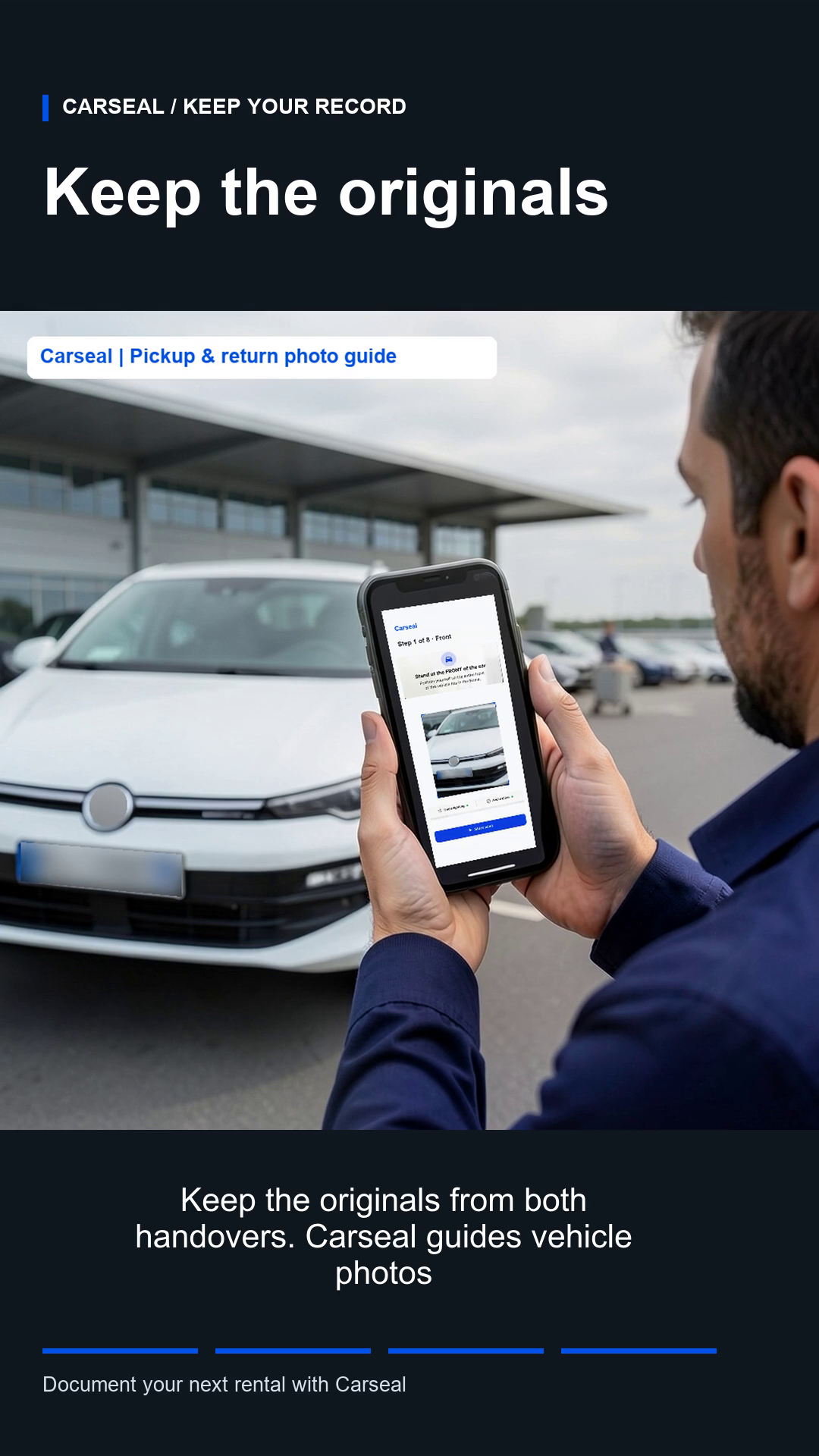
At pickup, photograph the entire vehicle from several angles before driving away. Then take clear detail views of the bumpers, wheels, glass, mirrors, roof, doors, fuel or charging area, dashboard, odometer, and any existing mark. Include enough surrounding context to show which vehicle and which side you recorded. Make sure the images are sharp, dated by the device when possible, and stored somewhere you can retrieve later. Record the mileage and fuel or charge level, and keep the signed inspection sheet, rental agreement, key receipt, and payment record together. If the vehicle is dirty, poorly lit, or blocked by other cars, ask for a better inspection position or note that limitation immediately.
If the reserved car is unavailable
Do not treat an upgrade, downgrade, substitution, or new charge as an informal conversation. Ask the representative to explain the vehicle class being offered, the total price, the deposit, the mileage and fuel terms, and whether the original reservation remains available. Photograph the vehicle you actually receive and keep the original reservation beside the revised documents. If the system cannot find a prepaid booking, save the payment confirmation and ask for a written case number or receipt. Avoid making a second payment or accepting a materially different arrangement without understanding whether it replaces or supplements the first one. Contact the booking channel promptly if the branch cannot resolve the mismatch.
At return, repeat the evidence process
Return evidence is not just a final snapshot. Photograph the vehicle while it is still parked at the authorized return location, including the same major surfaces you recorded at pickup. Capture the fuel or charge level, mileage, dashboard warnings, wheels, glass, bumpers, and any area that was difficult to see earlier. Keep the parking bay, return lane, signs, or other location context in at least one wider image. If staff inspect the vehicle, ask for a receipt or written confirmation showing the return time and recorded condition. If an after-hours drop is required, follow the written instructions, photograph the key drop and vehicle position where allowed, and keep the timestamped confirmation.
What to do when a charge appears later
First separate the type of charge: fuel, toll, cleaning, damage, late return, administration, or a correction to the original rental. Compare it with the agreement, return receipt, photographs, fuel receipt, mileage record, and payment statement. Ask for an itemized explanation and the inspection evidence supporting the charge. Keep communication factual: identify the rental, state what the documents show, ask what policy was applied, and request correction if the records do not match. Do not publish personal data, reservation numbers, or payment details in a public complaint. If a dispute remains, use the formal escalation route available through the rental company, booking intermediary, card issuer, consumer authority, or applicable local process.
Insurance and deposits need their own check
Insurance and deposit questions cannot be answered safely with a universal slogan. Your personal policy, credit card, rental agreement, country, vehicle, driver, and use of the car all matter. Before pickup, confirm what is covered, what is excluded, whether an excess or deductible applies, whether loss-of-use or administrative fees are included, and whether the card issuer requires advance enrollment. A deposit or authorization hold is also different from a final charge. Ask when it is released, which payment method receives the release, and what can delay it. Save the release confirmation and monitor the statement rather than relying only on an expected date.
A repeatable CarSeal handover checklist
Use the same order every time: save the agreement; photograph the complete vehicle; photograph the relevant details; record mileage and fuel or charge; confirm the actual vehicle and price; preserve the pickup documents; repeat the process at return; save the return confirmation; and keep originals in one folder. That discipline helps turn a stressful story into a timeline with evidence. It also makes it easier to identify what is known, what is disputed, and what action should happen next.
Final takeaway
The best protection is not taking the largest number of photographs or arguing at the counter. It is creating a small, organized record at the moments when responsibility changes hands. Current rental discussions show why availability, payment, fuel, deposit, insurance, and damage questions continue to matter. Check the terms for your own rental, document the vehicle and transaction clearly, and ask for written confirmation whenever the plan changes. CarSeal is built around that practical habit: guide the vehicle photos at pickup and return, then keep the original record accessible.
Topic research was informed by recurring public questions in rental-car communities. Individual posts are anecdotes, not verified facts about a company or claim.
Research signal: damage