
Charged for Rental Car Damage You Didn't Cause? How to Dispute It and Protect Yourself
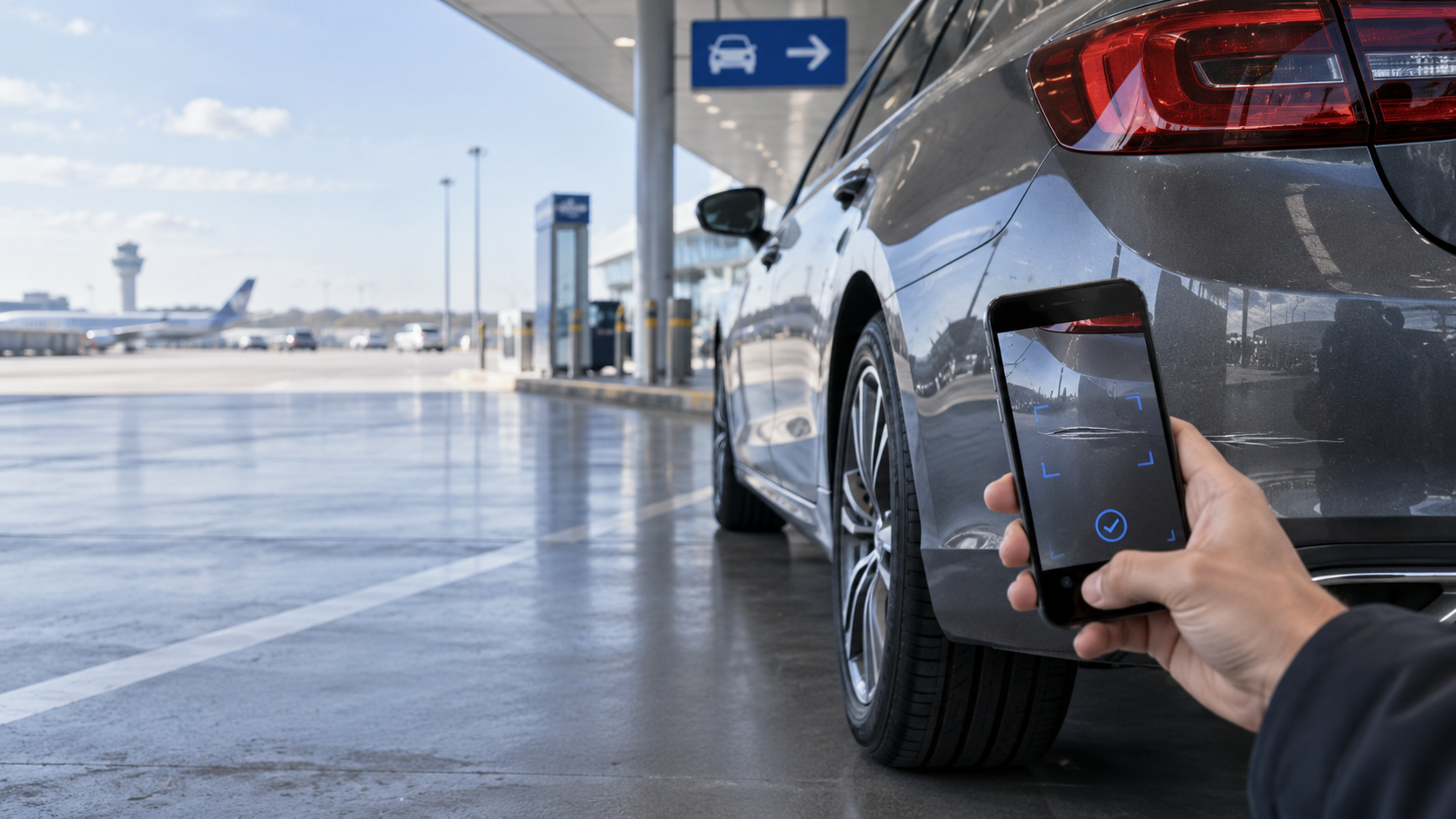
Updated October 2026 | 10-minute read
You return your rental car, hand over the keys, and head home. The trip is over. The car seemed fine. There's nothing left to worry about.
Then, a few days later, an email appears.
"We've identified damage to the vehicle during your rental."
Attached is a photograph of a scratch you don't remember seeing. There's also a bill, potentially for hundreds or even thousands of dollars.
Now you're being asked to pay for damage you're not even sure occurred while the vehicle was in your possession.
It's a situation that catches many travelers off guard. And one of the most frustrating parts is that by the time the charge arrives, the car is already back with the rental company.
You can't walk around it again. You can't inspect the scratch in person. And if you didn't take photographs when collecting and returning the vehicle, establishing what actually happened can be difficult.
So, can a rental company charge you for damage you didn't cause? How do you dispute an unexpected rental car damage charge? And more importantly, how can you make sure you're properly protected next time?
Here's what every rental car customer should know.
Why Rental Car Damage Charges Can Be So Frustrating
The fundamental problem with rental car damage disputes is simple: two parties may have very different records of the same vehicle.
The rental company has its inspection reports, damage photographs, and maintenance history.
You may have nothing more than your recollection of how the car looked when you returned it.
Consider a common scenario.
You collect a rental car at an airport. The parking garage is dimly lit, there are other customers waiting, and you're trying to get your luggage into the trunk.
An employee tells you that any existing damage has already been documented.
You quickly walk around the vehicle, sign the paperwork, and leave.
Five days later, you return the car to a different employee, who takes the keys and sends you on your way.
A week afterward, you receive an invoice for a scratch on the rear bumper.
Was it already there? Did it happen while the car was parked? Was it discovered immediately after you returned it, or several hours later?
Without consistent evidence from both ends of the rental, those questions can become surprisingly difficult to answer.
And that's why documenting the vehicle before you drive away matters so much.
Can a Rental Company Charge You After You've Returned the Car?
Yes. A rental company may issue damage charges after a vehicle has been returned, depending on the rental agreement and applicable law.
Vehicles aren't always inspected immediately when customers hand back their keys.
At busy airports, for example, rental cars may be collected in large batches and inspected later. After-hours returns can involve even longer gaps between the customer's departure and the company's inspection.
A charge issued after return isn't automatically invalid. But that doesn't mean every allegation of damage is necessarily correct.
If a rental company claims you're responsible for damage, several questions become important:
Was the damage documented before your rental began?
When was the alleged new damage first identified?
Are there photographs of the vehicle at pickup and return?
Does the evidence establish that the damage occurred during your rental?
Is the amount being charged consistent with the rental agreement and applicable damage policy?
These questions help distinguish an adequately supported claim from one requiring further investigation.
The European Consumer Centres Network recommends that renters inspect vehicles at both collection and return, retain photographs and paperwork, and request supporting documentation when disputing charges.
You can read its car rental consumer rights guidance here.
How a Tiny Scratch Can Turn Into a Large Rental Car Damage Bill
One of the most surprising aspects of rental car damage charges is how much a relatively small mark can cost.
Imagine a scratch that's only a few centimeters long.
To you, it looks like something that could be polished away.
But the rental company may assess the damage using a standardized repair matrix, replacement-part pricing, or a professional repair estimate.
Depending on the circumstances, the assessment might involve repainting a panel, replacing a component, or additional work.
And the final charge may include more than the visible repair.
Potential components include repair costs, administrative fees, and, where permitted, compensation for the period a vehicle cannot be rented.
That doesn't necessarily mean the estimate is unreasonable. Some apparently minor damage genuinely requires expensive work.
But it does mean you should understand what you're actually being charged for.
If an invoice appears excessive, ask for a breakdown explaining the damage classification, repair method, and any associated charges.
A photograph of a scratch and a final dollar amount aren't necessarily enough to answer all your questions about the assessment.
What to Do if You're Charged for Rental Car Damage You Didn't Cause
Receiving a damage claim can be stressful, especially when the amount is substantial.
The best approach is to treat it as a documentation problem rather than immediately turning it into an argument.
1. Request the Original Vehicle Inspection Reports
Before accepting a damage charge, ask the rental company for the records supporting its claim.
Start with the pickup inspection report and the return inspection report.
These documents may identify existing scratches, dents, wheel damage, or other imperfections.
If a scratch was already recorded when you collected the car, that information may be central to your dispute.
Ask whether photographs were captured at both inspections and whether the alleged damage can be clearly identified.
It's also worth requesting the date and time of the return inspection, particularly when the claim arrived well after you returned the vehicle.
2. Compare the Photographs
This is where your own documentation can be extremely valuable.
Check your phone gallery, cloud backups, travel videos, and any images shared with people who accompanied you.
Look carefully at the part of the vehicle mentioned in the claim.
An existing scratch might be visible in the background of an otherwise ordinary photograph.
Don't just compare isolated close-ups.
If the company claims damage to the rear-right bumper, for example, a wider photograph showing the bumper's location can help establish that you're examining the correct part of the car.
Ideally, you want images showing the same panel at both pickup and return.
Preserve the original image files when possible, including their metadata.
3. Ask How the Damage Was Assessed
Even when the alleged damage is visible, questions about the repair cost may remain.
Request an itemized invoice, assessment, or repair estimate.
Review whether the description matches the photographs.
Is it identified as a scratch, dent, chip, or another type of damage?
Does the amount correspond to the component allegedly affected?
Are administrative or other fees included?
If the company uses a standardized damage matrix, ask whether the relevant classification can be provided.
The goal isn't automatically to challenge every charge. It's to establish whether the assessment is accurate and supported.
4. Submit a Written Dispute
If the available evidence suggests the damage was pre-existing, occurred outside your responsibility, or has been incorrectly assessed, submit a formal written dispute.
Keep the message professional and factual.
Include your rental agreement number, the relevant dates, and a clear explanation of why you disagree with the charge.
Attach any photographs or records you have.
For example:
Subject: Dispute of Rental Vehicle Damage Charge – [Rental Agreement Number]
Dear Claims Team,
I am writing to dispute the damage charge associated with my recent rental.
I do not believe the alleged damage occurred during my rental period. I would appreciate a review of the claim and copies of the pickup and return inspection reports, available photographs, and the detailed damage assessment.
I have attached the relevant documentation available to me.
Please confirm the outcome of your review in writing.
Kind regards,
[Your Name]
If your photographs show that the damage was already present, explain this explicitly and refer to the corresponding image.
Avoid altering photographs or overstating what the evidence proves.
5. Escalate the Dispute When Necessary
If the rental company rejects your complaint, ask for a written explanation.
Depending on your location and circumstances, you may be able to escalate through a customer relations department, consumer protection organization, alternative dispute resolution service, or your card issuer.
For eligible cross-border rental disputes in Europe, the European Consumer Centres Network may provide assistance.
You may also be able to ask your card issuer about a disputed transaction, although chargebacks have eligibility requirements and don't necessarily eliminate contractual obligations.
Keep copies of all correspondence and follow any applicable deadlines.
How to Avoid Unfair Rental Car Damage Charges Before They Happen
Disputing a charge after the fact is one thing.
Avoiding an evidence problem in the first place is much better.
A systematic inspection at pickup and return helps establish the vehicle's condition at the two most important moments of the rental.
Before You Drive Away
Don't rely exclusively on the inspection report provided by the rental company.
Take a few minutes to examine the vehicle yourself.
Pay particular attention to areas that commonly accumulate cosmetic damage:
Front and rear bumpers, including their corners.
Wheels and rims, especially curb rash.
Doors, door edges, and handles.
Windshield and other glass.
Side mirrors and headlights.
Roof, hood, and trunk.
Seats, dashboard, and interior surfaces.
Capture wider photographs that identify the vehicle and individual close-ups of existing imperfections.
If you notice damage that isn't recorded on the rental agreement, report it immediately through the company's prescribed process and retain the acknowledgment.
Where possible, complete the inspection before leaving the rental location.
When Returning the Vehicle
Repeat the inspection.
Document the same areas you photographed at pickup, ideally from similar angles.
Pay particular attention to existing marks.
If you recorded a scratch on the bumper at collection, photograph that bumper again at return.
Where possible, return the vehicle during office hours and request a completed inspection report or receipt.
If returning after hours, document where the vehicle was parked, its visible condition, and the completed key-return process.
Keep the photographs and paperwork even after the deposit has been released.
What Makes Good Rental Car Damage Evidence?
Not all photographs provide the same information.
A close-up of a scratch may prove that the scratch exists. But without context, it may not show which car was photographed or when the image was taken.
Good documentation combines several elements.
EvidenceWhat it helps establishWide-angle vehicle photosOverall condition and location of marksClose-up damage photosDetail of individual scratches or dentsPickup and return imagesCondition at different rental stagesDate and time informationWhen documentation was recordedLocation informationWhere the inspection occurredOriginal preserved filesImage quality and available metadata
The more consistently these elements are recorded, the easier it is to reconstruct the condition of the vehicle later.
Why Taking Photos Isn't Always the Same as Having Reliable Evidence
Most travelers already have a camera in their pocket.
So why would documenting a rental car require anything more than taking a few pictures?
The problem isn't the camera.
It's the process.
Imagine taking 35 photographs of a rental car before leaving the airport.
Two weeks later, the rental company emails you about damage to the passenger-side door.
You open your gallery, which now contains hundreds of holiday photographs.
You find a close-up of a door, but you can't immediately remember whether it's the front door or the rear door.
You also discover that you didn't photograph the corresponding area at return.
Although you took plenty of pictures, your documentation has gaps.
There's another concern: a photograph's metadata and file history may not establish everything needed to assess its authenticity.
Original photographs often contain timestamps and location information, but metadata can be edited, lost during sharing, or disconnected from its original context.
A more structured inspection process helps reduce those weaknesses.
Instead of collecting random pictures, you create a consistent record of the vehicle at both handovers.
And when a question arises later, your evidence is organized around the car and the rental, rather than buried among unrelated photographs.
A Better Way to Document Your Rental Car With CarSeal
This is the problem CarSeal was created to solve.
CarSeal is a vehicle condition documentation app designed to help rental car customers capture and preserve evidence at pickup and return.
Rather than relying on scattered photographs, it provides a guided approach to recording the vehicle's condition.
How CarSeal Works
Step 1: Document the Vehicle at Pickup
Use CarSeal's guided scanning process to capture the vehicle before your rental begins.
The structured inspection helps you document relevant areas rather than relying entirely on memory.
Step 2: Preserve the Record
CarSeal incorporates timestamp and location information alongside tamper-evident documentation features.
These help support the integrity and traceability of the inspection record.
Step 3: Inspect the Car Again at Return
Repeat the inspection when returning the vehicle.
By documenting both stages, you create records that can be compared when questions about vehicle condition arise.
Step 4: Review Potential Damage Differences
CarSeal's AI-assisted damage detection helps identify potential marks and differences for review.
AI detection is not infallible, so any flagged damage should be assessed in context.
Step 5: Generate Shareable Evidence
CarSeal supports downloadable reports and shareable report links, making it easier to organize and communicate the available documentation.
This can be useful if you need to explain the vehicle's condition to a rental company or insurer.
The objective isn't to avoid paying for damage you actually caused. It's to make sure you have a reliable record when responsibility is disputed.
Try CarSeal for your next rental — first scan free →
What About Rental Car Insurance?
Insurance is an important consideration, but it isn't a substitute for documenting the vehicle's condition.
Depending on your coverage, rental car protection may reduce the amount you're required to pay for covered damage.
However, policies differ significantly.
Some exclude particular components, such as tires, glass, or underbody damage. Others involve deductibles, excess amounts, or claim documentation requirements.
Credit card rental coverage may also have specific eligibility conditions, including payment method, rental duration, location, and exclusions.
And even when damage is potentially covered, an insurer may request proof of the incident and supporting documentation.
That makes an organized rental inspection useful whether or not you purchased additional protection.
Photographic evidence cannot guarantee insurance coverage or a successful dispute, but it may help establish facts relevant to the claim.
The Rental Car Inspection Habit Worth Making Permanent
Most people never expect to dispute a rental car damage charge.
That's precisely why they don't spend much time documenting the car.
But the few minutes you spend inspecting a vehicle at pickup can become extremely valuable if questions emerge after return.
Think of the inspection as part of collecting and returning the vehicle, just like checking the fuel level or locating the keys.
Before your next rental, remember three things:
Inspect before you drive. Document before you return. Preserve the evidence afterward.
That routine can help you address uncertainty over when damage appeared and what the vehicle actually looked like during handover.
And with a structured documentation tool, it becomes easier to repeat the process every time.
Frequently Asked Questions
Can a rental car company charge me for damage after I've returned the car?
Yes, depending on the contract and applicable law. The fact that a charge arrives after return does not automatically make it invalid. However, you can request an explanation and evidence supporting the claim.
What should I do if I'm charged for a rental car scratch I didn't cause?
Request the pickup and return inspection reports, photographs, and an itemized damage assessment. Compare those records with your own evidence, then submit a written dispute explaining why you disagree with the charge.
Can I dispute rental car damage without photographs?
Yes. You may still be able to rely on rental agreements, pre-existing damage reports, employee acknowledgments, return receipts, or photographs held by the rental company. However, lacking your own evidence may make the dispute more challenging.
How much can rental companies charge for a scratch?
There is no universal amount. Charges depend on the damage, vehicle, rental agreement, repair assessment, insurance protection, and applicable law. If an amount appears excessive, request an itemized explanation.
Are rental car inspection photos legally valid evidence?
Photographs can be relevant evidence in a dispute, but their weight depends on authenticity, clarity, timing, context, and applicable legal rules. Timestamps and tamper-evident documentation can help support the reliability of a record without guaranteeing its acceptance.
Should I take photos when picking up or returning a rental car?
Both. Pickup photographs help document pre-existing damage, while return photographs help show the vehicle's condition at the end of the rental. Taking both provides a more useful comparison than documenting only one stage.
Can CarSeal guarantee that I won't be charged for damage?
No. CarSeal helps document vehicle condition and preserve evidence. It does not guarantee that a rental company will withdraw a charge, that an insurer will pay a claim, or that all damage will be detected.
Final Thoughts: A Rental Car Shouldn't Become an Expensive Guessing Game
A rental car damage dispute often comes down to a question that sounds simple but can be surprisingly difficult to answer:
What condition was the car actually in when you collected and returned it?
When there's no clear record, you're left trying to reconstruct the past through emails, inspection reports, and memory.
But when you've documented the vehicle carefully at both handovers, you have something much more useful: evidence of its condition at those moments.
That's why a consistent inspection routine belongs on every rental car checklist.
You may never need to dispute a damage charge.
But if you do, you'll be glad you documented the car before the disagreement began.
Their inspection. Your evidence.
Protect your next rental with CarSeal →
CarSeal provides vehicle condition documentation and is not a substitute for legal or insurance advice. Rental policies, insurance terms, and consumer rights vary by jurisdiction.