
AI Rental Car Damage Scanners Are Changing the Rules: How to Protect Yourself From Unexpected Charges
Published: October 27, 2026 | Reading time: Approximately 10 minutes
Imagine returning your rental car at the airport, grabbing your luggage, and walking toward your flight. Everything seems normal. You haven't had an accident, the car looks exactly as it did when you collected it, and you expect nothing more than a final receipt.
Then your phone lights up.
An automated inspection system has identified possible damage to the vehicle. You could be responsible for a scratch, dent, or other imperfection you never noticed.
For a growing number of travelers, artificial intelligence is becoming part of the rental car return experience. Companies are introducing automated vehicle inspection technology to document car conditions more consistently and identify possible damage.
The technology promises efficiency and transparency. But it also raises an important question:
When a machine identifies damage, how can a renter demonstrate that the damage was already there?
The answer begins long before you return the keys.
The Rise of AI Rental Car Damage Scanners
Traditional rental car inspections generally involved an employee walking around the vehicle, documenting visible damage, and comparing its condition against an existing record.
Increasingly, some rental locations use automated inspection systems.
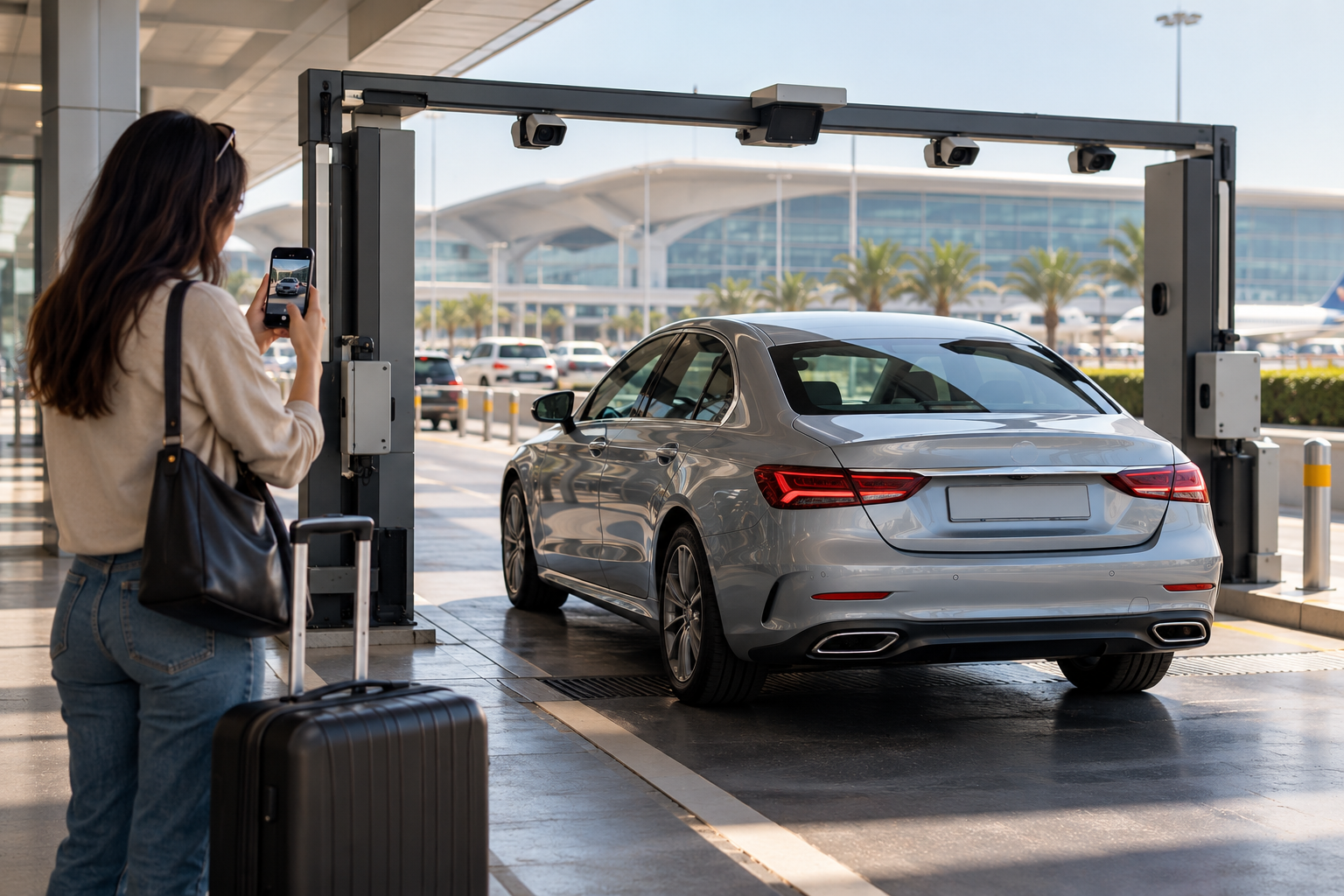
These systems can include high-resolution cameras, controlled lighting, specialized sensors, and software that analyzes images of a vehicle as it passes through an inspection area.
The purpose is to create a detailed record of the vehicle's condition and identify changes between inspections.
For rental companies, this technology can offer important benefits:
More consistent vehicle inspections.
Faster processing at busy rental locations.
Better records of vehicle condition.
Reduced reliance on entirely manual inspections.
Potentially faster identification of newly visible damage.
However, automation does not eliminate disagreements.
A detection system may identify something that requires closer investigation. Whether an imperfection qualifies as new, chargeable damage is a separate question.
This distinction matters enormously to renters.
AI Detection Is Not the Same as Proof of Responsibility
A scanner can potentially identify a mark on a vehicle.
But establishing responsibility for that mark may require additional evidence.
A fair damage assessment should consider questions such as:
Was the damage present before the rental began?
Were the pickup and return images captured under comparable conditions?
Does the alleged damage meet the company's published damage standards?
Could lighting, dirt, reflections, or image quality affect the assessment?
Is there a clear record linking the newly identified damage to the rental period?
And most importantly, can the renter review the underlying evidence?
Technology can assist an investigation, but the ability to identify a visual difference should not be confused with conclusive proof of who caused it.
What Recent Rental Car Damage Disputes Reveal
In June 2026, an InvestigateTV report examined concerns surrounding automated rental car damage inspections.
One renter described receiving a damage notification shortly after returning a vehicle at an airport. The reported charges concerned small dents identified through automated inspection imagery.
According to the investigation, the renter questioned the assessment and described difficulties obtaining a satisfactory review.
The report later stated that the claim was closed and the customer had no financial responsibility.
The case is significant because it illustrates how an automated damage alert can create a dispute that still requires human review and supporting evidence.
It does not demonstrate that every AI inspection is inaccurate, nor that automated systems are inherently unfair.
Instead, it highlights the importance of transparency, accessible evidence, and clear procedures when customers challenge a damage assessment.
For travelers, the practical lesson is simple:
Do not rely exclusively on the rental company's inspection record. Create your own.
Why Your Own Rental Car Photos Matter More Than Ever
When renting a vehicle, both parties benefit from knowing exactly what condition the car was in at pickup and return.
Rental companies may have professional inspection systems, but renters usually have something equally important: a smartphone.
A carefully documented set of photographs can establish a contemporaneous visual record of the vehicle.
That record can become valuable if a disagreement develops later.
Consider two situations.
In the first, a traveler collects a car, quickly checks for obvious damage, drives away, and returns the vehicle without taking photographs.
Several days later, a rental company reports a scratch on the rear bumper.
The traveler believes the scratch was already there but has no independent evidence.
In the second, the traveler photographs the rear bumper from several angles before driving away, then repeats the photographs at return.
If the same mark appears in both sets, the traveler has a clearer basis for questioning whether the damage was new.
Photographs cannot guarantee that a claim will be dismissed. However, relevant, clear, and properly preserved evidence can substantially improve the quality of a dispute.
The Rental Car Inspection Checklist Every Traveler Should Follow
The most effective time to document a rental car is before you start driving.
A rushed inspection can leave important gaps, particularly when damage is small or located in less obvious areas.
Step 1: Capture the Entire Exterior
Start with photographs showing all four sides of the vehicle.
Take images of:
Front bumper and grille.
Rear bumper and trunk.
Driver's side.
Passenger's side.
Hood and roof.
Front and rear corners.
Wheels and wheel arches.
Side mirrors.
Windshield and other windows.
These photographs establish the overall condition of the vehicle.
Whenever possible, use consistent angles and sufficient lighting.
Step 2: Photograph Existing Damage Closely
If you notice a scratch, dent, chip, or scuff, document it separately.
Take one photograph showing where the imperfection is located on the vehicle.
Then capture a closer image showing its appearance.
This combination is particularly useful because an isolated close-up photograph may not clearly establish which panel or part of the car is affected.
Avoid relying on a single photograph for important damage.
Multiple perspectives can help distinguish a genuine surface mark from reflections or dirt.
Step 3: Check Easy-to-Miss Areas
Many travelers focus on the doors and major body panels.
However, potentially disputed damage can also involve:
Lower bumper edges.
Alloy wheels.
Windshield chips.
Headlight and taillight covers.
Door handles.
Side mirror housings.
Interior seats and trim.
Cargo area surfaces.
Inspect accessible areas without crawling beneath the vehicle or putting yourself in an unsafe position.
Do not attempt to dismantle or manipulate any part of the rental car.
Step 4: Record the Dashboard and Interior
Take photographs of the dashboard, mileage, and fuel or battery level.
Document any obvious interior damage, including torn upholstery, stains, broken controls, or damaged trim.
These images can help resolve disagreements that are unrelated to exterior body damage.
Step 5: Check the Rental Company's Existing Damage Report
Before departure, compare your observations against the company's recorded condition report.
If you discover damage that has not been documented, report it through the rental company's approved process and request confirmation.
Keep copies of relevant correspondence.
Your personal photographs should supplement the official inspection procedure, not replace it.
Why Return Photographs Are Just as Important
Many travelers remember to inspect the vehicle at pickup but forget to photograph it when returning it.
This can leave a major gap in the evidence.
Pickup photographs establish the starting condition.
Return photographs help document the ending condition.
Both are important.
Before handing over the keys or leaving an unattended return location, capture another complete set of photographs.
Try to reproduce the same perspectives you used at pickup.
Pay particular attention to any previously documented scratches or dents.
Photograph the mileage and fuel level again, and retain your return confirmation.
If the rental company performs an automated scan, follow the site's instructions and avoid obstructing the inspection lane.
Where permitted, complete your own photographs in a safe parking area before entering the return process.
What If You're Returning the Car at Night?
Poor lighting creates additional challenges.
A dark parking structure, rainy weather, or strong reflections can make small imperfections difficult to capture.
Use the best lighting safely available.
Check photographs immediately to ensure important surfaces are visible and in focus.
If conditions are inadequate, document the limitation and contact the rental company through its approved reporting channel.
Do not assume a blurry photograph will be sufficient to resolve a later dispute.
AI Vehicle Inspections Versus Smartphone Documentation
Automated inspection systems and personal smartphone photographs serve related but different purposes.
A professional inspection system may capture images under controlled conditions and analyze the vehicle consistently.
A renter's smartphone offers independence and direct control over what gets documented.
The strongest approach is not necessarily choosing one over the other.
It is having multiple reliable records that can be compared when questions arise.
What a Good Inspection Record Should Contain
A useful evidence record should make it easy to answer five questions:
Which vehicle was inspected?
When was the inspection performed?
What was the vehicle's condition?
Which specific areas were photographed?
How does the condition compare with the earlier inspection?
A disorganized camera roll containing dozens of photographs can make this process difficult.
The challenge is not simply taking photographs.
It is organizing them into a clear, understandable record.
That is where purpose-built vehicle documentation tools can become useful.
How CarSeal Helps Travelers Document Rental Vehicles
CarSeal is designed to help renters create a more structured record of vehicle condition.
Instead of relying solely on memory or manually sorting through a phone's photo gallery, travelers can use a guided inspection workflow.
CarSeal focuses on documenting the condition of the vehicle before and after a rental.
Its functionality includes:
Guided vehicle scanning
A structured inspection helps users approach documentation more systematically and avoid overlooking important viewpoints.
Photo documentation
Images provide a visual record of the vehicle's condition at the time they are captured.
Time and location context
Relevant metadata can help establish when and where documentation took place, subject to device settings and available permissions.
Before-and-after comparison
Comparing pickup and return documentation can make existing marks and changes easier to examine.
Organized inspection reports
A consolidated record can be easier to review and share than a large collection of unrelated photographs.
CarSeal is an independent documentation tool. It does not determine legal liability, replace rental company procedures, or guarantee the outcome of a damage dispute.
Its purpose is to help renters preserve clearer evidence.
For someone collecting a vehicle in an unfamiliar city, this additional documentation can offer practical peace of mind.
What to Do If You Receive an Unexpected Rental Car Damage Charge
Suppose you have already returned the vehicle and receive an email claiming that new damage has been discovered.
Do not immediately assume that the charge is valid or invalid.
Begin by gathering the facts.
1. Request the Complete Damage Evidence
Ask the rental company to provide the photographs and inspection records supporting the claim.
Request both pickup and return documentation where available.
You should also ask for the precise location of the alleged damage and an explanation of how the charge was calculated.
2. Compare the Evidence With Your Own Photographs
Locate photographs showing the same vehicle panel or component.
Compare angles, visible landmarks, existing scratches, and the surrounding surface.
If the alleged damage appears in your pickup images, identify the relevant photographs clearly.
Avoid altering original evidence files.
If you annotate copies for explanation, preserve the originals separately.
3. Review the Rental Agreement
Check the relevant terms, including:
Damage definitions.
Existing damage reporting requirements.
Permitted wear and tear.
Administrative fees.
Excess or deductible provisions.
Dispute procedures.
Reporting deadlines.
Rental agreements vary by provider and jurisdiction.
A damage allegation should be evaluated against the actual agreement and applicable consumer protections.
4. Submit a Written Dispute
Communicate through an official customer service or claims channel.
Explain why you are challenging the charge.
Include the rental agreement number, the disputed amount, and clearly identified supporting photographs.
Keep the communication factual.
A concise explanation supported by relevant evidence is generally more useful than an emotional or accusatory message.
5. Escalate Through Appropriate Channels
If you cannot reach a satisfactory resolution, review the company's escalation process.
Depending on the circumstances, options may include a corporate claims team, an appropriate consumer protection body, your insurer, or your payment provider.
Understand applicable deadlines and consequences before initiating a payment dispute.
The correct process depends on the rental agreement, the country involved, and the evidence available.
Can You Trust AI Rental Car Inspections?
Automated inspections are neither automatically trustworthy nor automatically unreliable.
Their value depends on factors such as imaging quality, comparison methods, operational procedures, and the way uncertain findings are reviewed.
When properly implemented, automated systems may improve consistency and documentation.
But renters still need transparency.
A trustworthy inspection process should make relevant evidence accessible and provide a meaningful way to challenge disputed findings.
Human review also remains important.
If a mark is newly detected, the next question should not simply be how much it costs to repair.
The company must also determine whether the renter is responsible under the agreement.
This requires more than identifying a difference between photographs.
The Future of Vehicle Condition Documentation
AI-powered vehicle inspection technology is likely to remain an important part of the industry's digital transformation.
Rental providers have incentives to improve inspection speed, reduce operating costs, and standardize documentation.
At the same time, customers increasingly expect digital records, clear explanations, and accessible dispute procedures.
These developments create an opportunity for better documentation on both sides of the transaction.
Rental companies can improve their inspection processes.
Travelers can improve their own evidence collection.
Neither needs to depend exclusively on the other's records.
Frequently Asked Questions
Can an AI scanner charge me for rental car damage?
An AI scanner may flag suspected damage for review. The rental company determines whether to pursue a charge under its policies and rental agreement. Automated detection does not, by itself, establish legal responsibility.
Can I dispute damage identified by an AI inspection?
Yes, you can challenge an alleged charge through the rental company's dispute procedures. Your rights and the available escalation options depend on the agreement and applicable law.
Should I photograph a rental car even if the company uses AI scanners?
Yes. Independent pickup and return photographs can provide useful evidence if a disagreement occurs.
How many photos should I take before renting a car?
There is no universal number. Prioritize complete coverage, clear images, and detailed photographs of existing damage rather than aiming for a specific count.
Can rental car companies charge for existing scratches?
Whether a particular charge is permissible depends on the rental terms, applicable law, the evidence, and whether the damage was already present. Good pickup documentation can help establish the starting condition.
What happens if I forget to take return photographs?
You can still request the rental company's inspection records, review your pickup photographs, preserve receipts and communications, and challenge an unsupported charge. However, missing return photographs may make the evidence less complete.
Does CarSeal guarantee that I won't pay for rental car damage?
No. CarSeal helps organize and document vehicle condition. It cannot prevent a company from making a claim or guarantee that a disputed charge will be reversed.
Final Thoughts: Your Rental Car Shouldn't Become an Evidence Problem
Most rental experiences end without a damage dispute.
But when a disagreement happens, the quality of the available evidence can become extremely important.
As rental companies adopt increasingly sophisticated inspection technology, travelers should develop better documentation habits of their own.
Before collecting your next vehicle, take a few minutes to inspect it carefully.
Photograph existing damage, preserve the original files, and repeat the process when returning the vehicle.
Those simple steps can help establish a clearer record of the rental.
Your rental company may have automated cameras. You can have your own evidence.
CarSeal helps make independent vehicle documentation more structured, consistent, and accessible.
Don't pay for damage you didn't cause. Document your rental with CarSeal.
Learn more at carseal.ai.